1920–1927
HOLLAND TUNNEL

Construction of the Holland Tunnel begins in 1920. Its pioneering mechanical ventilation system includes the tower at what is now Pier 34. The tunnel opens in 1927.

1930–1932
COMMERCIAL PIER 34

A much larger commercial pier is developed at the foot of Spring Street, extending around the ventilation structure. The pier includes a substantial terminal shed and becomes part of Manhattan’s working waterfront.

1930s–1950s
WORKING WATERFRONT

Pier 34 functions as an active maritime terminal, serving coastal and international shipping. The ventilation tower remains embedded within the larger pier complex.

1950s–1970s
DECLINE

As commercial shipping shifts away from Manhattan, the pier gradually loses its original function and falls into disuse.

1983–1984
ARTISTS’ PIER

The abandoned terminal becomes an informal art space. Artists including David Wojnarowicz, Mike Bidlo and others use the vast derelict building for murals, installations and performances.

1984
DEMOLITION

The old terminal building is demolished, leaving the Holland Tunnel ventilation tower and remnants of the former pier structure and pile field in the river.

1993
REDESIGN

Community Boards 1 and 2 advance a redesign for Pier 34 based on two narrower finger piers rather than rebuilding the former full-width pier. The proposal enlarges the finger piers and calls for benches, lighting and public access.

1990s–TODAY
CURRENT CONDITION

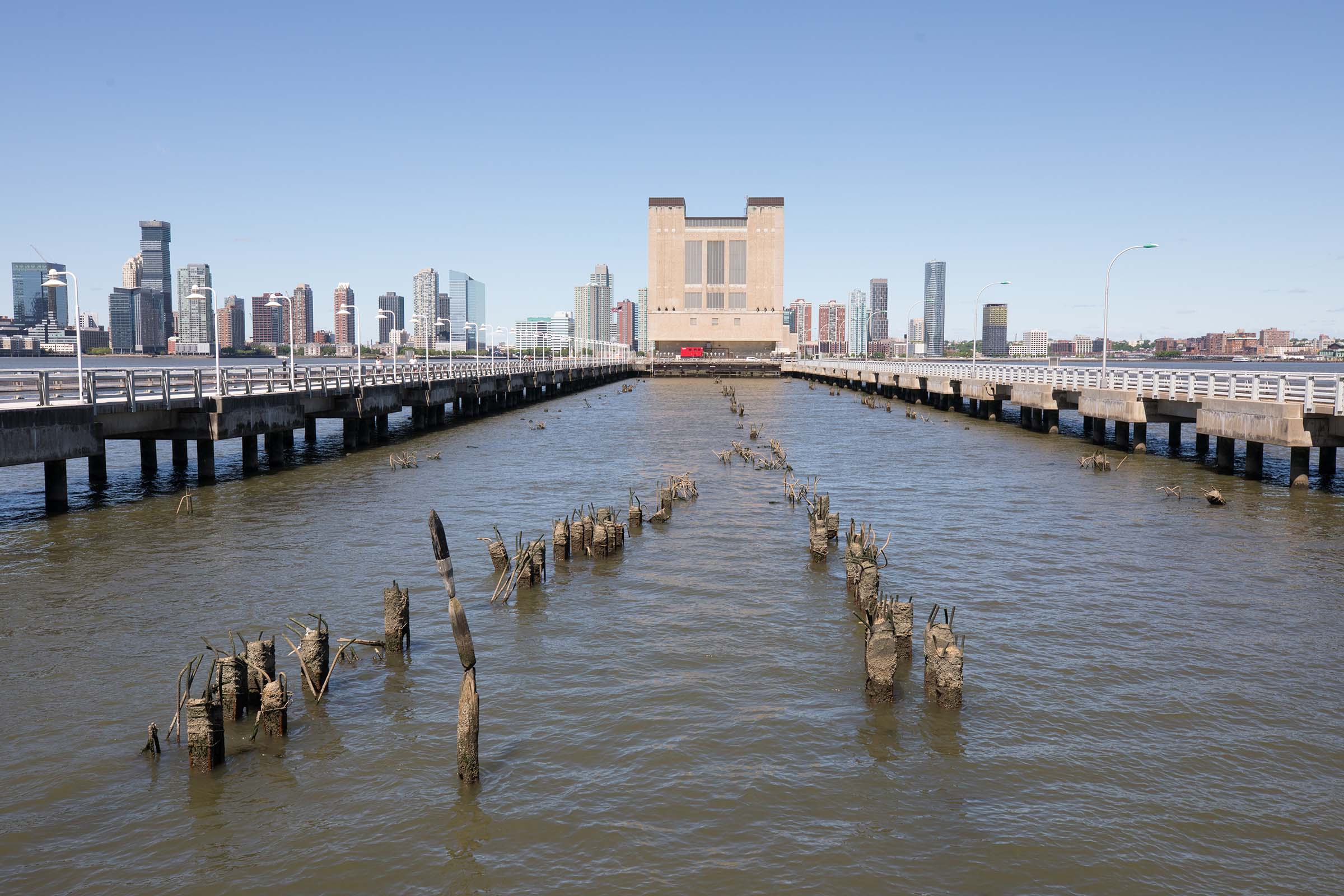
Pier 34 now consists of two pile-supported finger piers extending toward the historic ventilation tower. The southern pier is open to the public, while the northern pier remains dedicated to Port Authority operations and emergency access.

PIER 34 NEW YORK, Summer 83                    

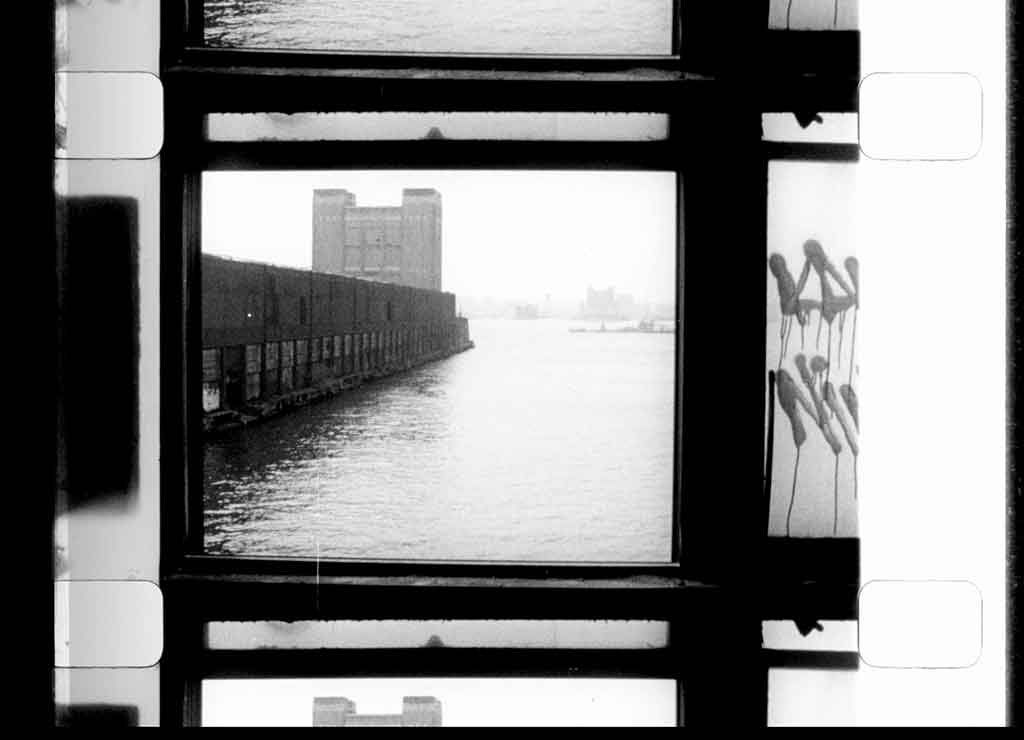
Marion Schemama’s video PIER 34 NEW YORK, Summer 83 was shot at the legendary Pier 34 in New York City. From 1983-1985, artists David Wojnarowicz and Mike Bidlo took over the decrepit building with a community of artists-trespassers, without permission, to imagine and realize an alternative art ecosystem.

‍

For more information please visit: https://kadist.org/work/pier-34-new-york-summer-83/
A 1980s Art Experiment on an NYC Pier                   

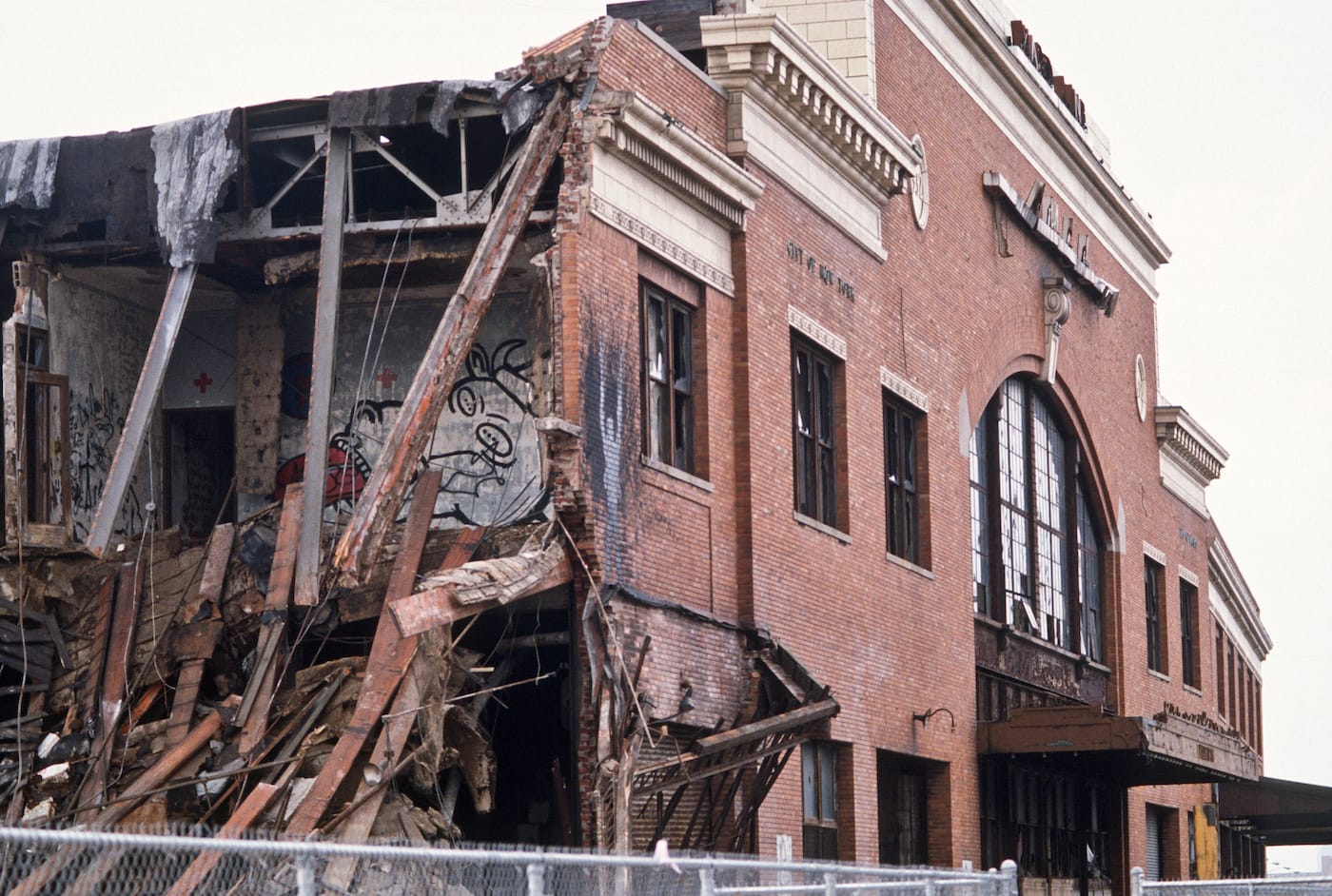
The decline of the New York City waterfront in the 1960s, followed by the near bankruptcy of the city in the 1970s, left hulking piers on the shore that were easier to leave to their decay than tear down. In one of these - the 1930s Ward Line shipping terminal at the end of Canal Street - artists David Wojnarowicz and Mike Bidlo, along with a revolving community of trespassers, worked without funding and without monetary intent, claiming the abandoned space for a two-year alternative art system.

‍

For more information please visit: https://hyperallergic.com/something-possible-everywhere-pier-34/
Pier 34: Something Possible Everywhere                

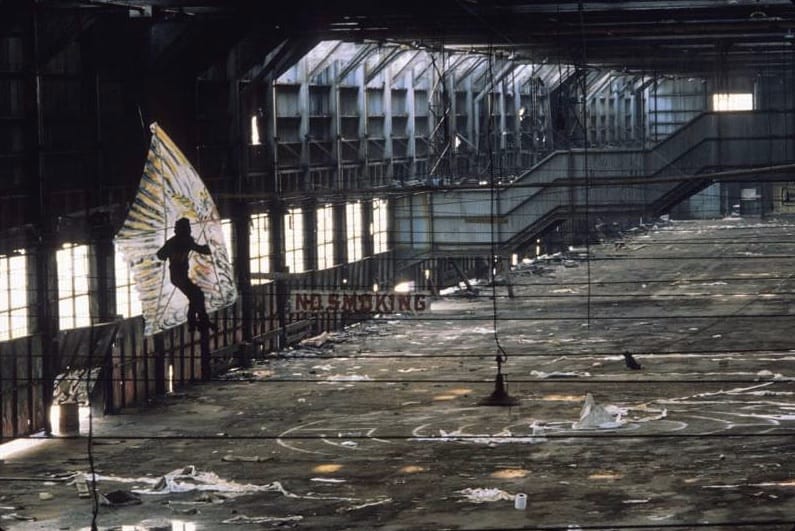
This exhibition catalogue celebrates the moment, thirty-three years ago, when a group of artists trespassed on a city-owned building on Pier 34 and turned it into an illicit museum and incubator for new art.

‍

For more information please visit: https://repository.falmouth.ac.uk/1962/1/Pier-34-Catalogue%2BCover.pdf

Tunneling Into Pier 34’s History‍
‍

Even in the heart of winter, Pier 34 draws runners and sunset chasers to its popular southern pathway, but this pier’s importance runs deeper than its surface appeal. The striking tower at its edge serves as a ventilation shaft for the Holland Tunnel far beneath the river, and a dive into this pier’s past uncovers feats of engineering and fascinating architectural history.

‍

For more information please visit: https://hudsonriverpark.org/pier-34-history/

A parallel Tradition
‍

While Loop Pool grows directly from the history and existing infrastructure of Pier 34, it also belongs to a longer tradition of public urban bathing. Swiss Freibäder, along with bathing places in many European cities shaped by rivers and lakes, have long integrated swimming into the everyday life of the city, bringing together water, architecture and public space. Zurich’s historic Unterer Letten is one expression of this broader culture, embedded in its surrounding architecture and urban landscape. Loop Pool brings this tradition into a New York context, adapting it to the Hudson River waterfront and the particular history of Pier 34.

‍

https://www.zuerich.com/en/visit/nature/flussbad-unterer-letten

‍

‍

‍

‍

‍